The Geological Wonders of Halong Bay | Du Yen Cruise
The Geological Wonders of Halong Bay: A Journey Through Millions of Years of Natural History
Halong Bay is widely celebrated for its emerald waters, magnificent limestone islands, and breathtaking seascapes. However, beyond its beautiful scenery lies an extraordinary geological story that has developed over millions of years. Every limestone tower, hidden cave, and enclosed lagoon reveals a chapter in the natural history of northern Vietnam.
Recognized as part of a UNESCO World Heritage property, Halong Bay – Cat Ba Archipelago is one of the world’s most remarkable examples of marine-invaded tower karst landscapes. Its geological formations demonstrate the powerful influence of water, erosion, tectonic movements, and changing sea levels.
For travelers interested in nature, science, photography, and exploration, discovering the geological wonders of Halong Bay adds a fascinating dimension to a cruise journey. With Du Yen Cruise Halong, visitors can admire these extraordinary formations from the water while enjoying the peaceful atmosphere of this famous destination.
1. The Ancient Geological History of Halong Bay
The geological history of Halong Bay stretches back approximately 500 million years. During this immense period, the region experienced significant changes in its environment, including shifts in sea levels, tectonic movements, sedimentation, and erosion.
Thick layers of limestone gradually developed through ancient geological processes. Over millions of years, water interacted with the rock, slowly dissolving and reshaping its surface. This process created the foundations of the karst landscape that visitors admire today.
Later changes in the Earth’s surface and repeated fluctuations in sea levels transformed the landscape further. Limestone hills and valleys became partially submerged, creating the spectacular seascape of isolated towers and islands rising directly from the sea.
According to geological research recognized by UNESCO and international geological organizations, Halong Bay provides an outstanding example of tropical karst evolution and marine erosion.
2. Limestone Karsts: The Iconic Landscape of Halong Bay
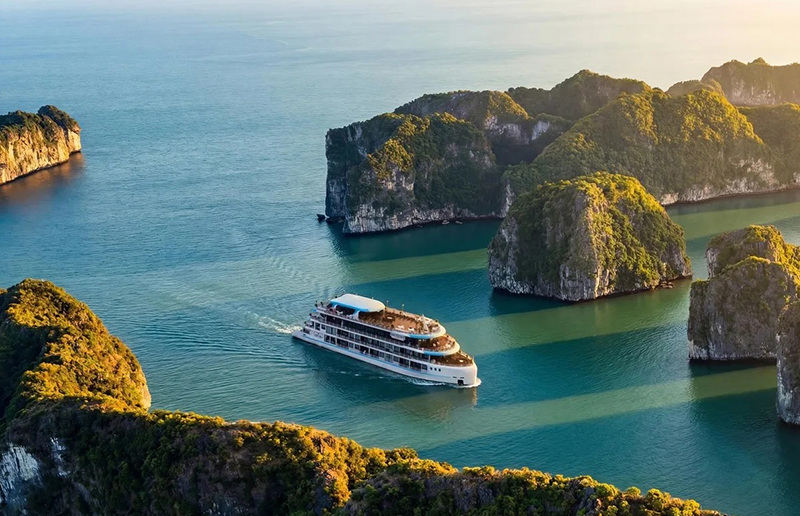
The most recognizable feature of Halong Bay is its extraordinary collection of limestone karsts. These formations appear as towering pillars, rounded peaks, steep cliffs, and forest-covered islands scattered across the emerald water.
Karst landscapes develop when slightly acidic water gradually dissolves soluble rocks such as limestone. Over long periods, this process creates distinctive landforms, including caves, underground passages, valleys, depressions, and isolated rock towers.
Fengcong and Fenglin Karst Formations
Two important geological terms help explain the landscape of Halong Bay:
- Fengcong karst: Clusters of closely grouped limestone peaks, often separated by enclosed depressions or valleys.
- Fenglin karst: More isolated limestone towers that rise individually from the surrounding landscape.
Halong Bay is particularly remarkable because these formations have been modified by marine processes. The result is a dramatic landscape in which limestone towers emerge directly from the sea.
As a cruise moves through the bay, visitors can observe how the shapes, heights, and arrangements of the islands create a constantly changing natural panorama.
3. How Did the Sea Create Halong Bay’s Unique Landscape?
Water has played a central role in shaping Halong Bay. Rainwater gradually dissolves limestone, while waves and tides continuously influence the exposed coastal rock formations.
As sea levels changed over geological time, parts of the ancient karst landscape were flooded. Valleys, depressions, and lower sections of limestone terrain became submerged, leaving taller rock formations visible above the water.
Marine erosion continued to shape the coastline, creating notches, caves, tunnels, and other distinctive features along the limestone islands.
This combination of tropical karst development and marine modification is one of the reasons why Halong Bay is internationally important from a geological perspective.
4. Discover the Fascinating Cave Systems of Halong Bay
Another extraordinary feature of Halong Bay is its diverse cave system. Hidden inside limestone islands, these natural chambers reveal the long history of water movement and rock erosion.
Sung Sot Cave: A Spectacular Underground World
Sung Sot Cave, also known as Surprise Cave, is among the most famous natural attractions in Halong Bay. Its impressive chambers contain a variety of stalactites and stalagmites formed through the gradual deposition of minerals carried by water.
The large interior spaces, unusual rock shapes, and natural lighting create an unforgettable atmosphere for visitors.
Travelers can discover Sung Sot Cave as part of the sightseeing program featured in the Du Yen Cruise Halong 2 Days itinerary, subject to the confirmed operating schedule.
Luon Cave: A Natural Gateway to a Hidden Lagoon
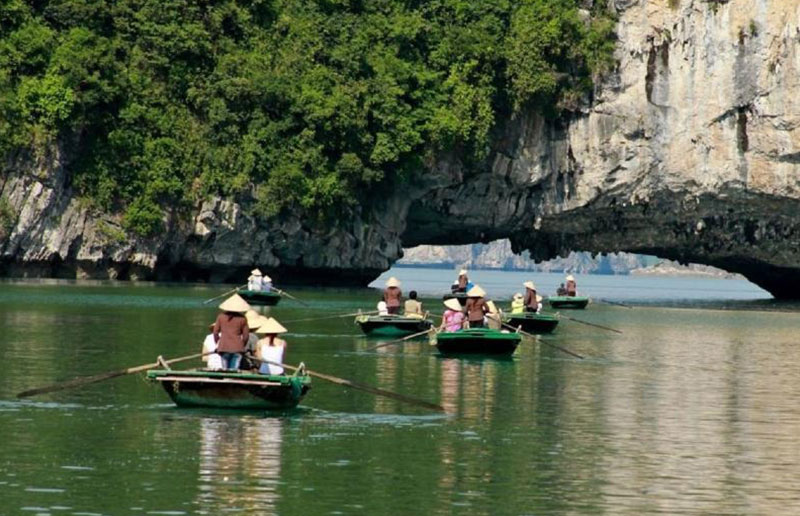
Luon Cave offers a different experience from the large underground chambers of Sung Sot Cave. This natural passage connects the open water with a sheltered lagoon surrounded by limestone cliffs.
Visitors can explore the area by kayak or traditional bamboo boat, depending on local conditions and the available excursion program.
The calm water and enclosed landscape create a peaceful environment that highlights the relationship between limestone geology and coastal ecosystems.
5. Hidden Lakes and Enclosed Lagoons Among Limestone Islands
Some of the most fascinating geological features in the wider Halong Bay – Cat Ba Archipelago property are enclosed depressions and lakes associated with karst formations.
These natural spaces develop when limestone terrain is gradually dissolved and reshaped, creating depressions that may later become flooded as sea levels rise.
From the water, visitors can see how steep limestone cliffs surround sheltered areas, creating landscapes that feel almost completely separated from the open sea.
Exploring these environments by kayak offers an opportunity to observe the landscape from a closer perspective while appreciating the quiet atmosphere of the bay.
6. The Role of Climate in Shaping Halong Bay
The tropical and humid climate of northern Vietnam has played an important role in the development of Halong Bay’s karst landscape.
Rainwater interacts with carbon dioxide in the atmosphere and soil, creating weakly acidic water. As this water moves over and through limestone, it gradually dissolves the rock and contributes to the development of caves, depressions, and other karst features.
Temperature, rainfall, vegetation, and groundwater circulation all influence the way these geological processes operate.
Even today, natural erosion and weathering continue to influence the landscape, although these changes generally occur over periods much longer than an ordinary human lifetime.
7. Why Halong Bay Is Important to the World’s Natural Heritage
Halong Bay was first inscribed on the UNESCO World Heritage List in 1994 for its exceptional natural beauty. Its recognition was extended in 2000 to include its outstanding geological and geomorphological value.
In 2023, the World Heritage property was significantly modified to include the Cat Ba Archipelago, becoming known as Halong Bay – Cat Ba Archipelago.
The property is internationally recognized for demonstrating important stages of tropical karst evolution, particularly the transformation of limestone terrain through marine inundation and erosion.
Its geological importance is also reflected in its recognition as an international geological heritage site by the International Union of Geological Sciences.
These recognitions highlight why protecting the natural landscape is essential for future generations.
8. The Best Way to Discover Halong Bay’s Geological Landscape
Although geological formations can be studied through books and photographs, experiencing Halong Bay from the water provides a much more impressive perspective.
Observe Limestone Islands from the Cruise
A cruise allows visitors to move through different sections of the bay and appreciate the scale of its limestone formations. The changing viewpoints reveal how individual islands form part of a much larger geological landscape.
Explore Caves and Coastal Formations
Visiting caves provides an opportunity to see geological processes at a closer level. Stalactites, stalagmites, rock layers, and natural passages offer insight into the relationship between water and limestone.
Experience the Landscape by Kayak
Kayaking provides a more intimate way to explore quiet lagoons and sheltered waterways. Visitors can observe the towering limestone cliffs from the water while enjoying the natural surroundings.
These activities may be included in selected cruise programs. Travelers should check the final itinerary before departure.
Explore the available experiences through the Du Yen Cruise Halong itinerary page.
9. When Is the Best Time to Explore Halong Bay?
Halong Bay offers different visual experiences throughout the year. Each season brings its own atmosphere and opportunities for photography and sightseeing.
Spring: Fresh Landscapes and Comfortable Weather
Spring brings changing weather conditions, fresh greenery, and pleasant opportunities for sightseeing. It can be an enjoyable season for travelers interested in exploring caves and limestone islands.
Summer: Bright Colors and Tropical Scenery
Summer often brings vibrant green landscapes and longer daylight hours. However, visitors should be aware that heavy rain and tropical storms can affect cruise schedules.
Autumn: Beautiful Light and Scenic Views
Autumn is a popular period for exploring northern Vietnam. The changing light can create excellent photography opportunities, especially when the limestone islands are reflected in calm water.
Winter: Misty Landscapes and a Peaceful Atmosphere
Winter can transform Halong Bay into a quiet landscape with cool temperatures and occasional mist surrounding the limestone formations.
For more information about seasonal conditions, read the Ultimate Winter Travel Guide to Halong Bay.
10. Protecting the Geological Wonders of Halong Bay
Halong Bay is a valuable natural environment that deserves careful protection. Its limestone formations, caves, coastal ecosystems, and marine habitats are part of a geological and ecological heritage that has developed over millions of years.
Responsible tourism can help reduce environmental pressure and support the long-term conservation of this remarkable destination.
Visitors can contribute by following several simple practices:
- Never leave plastic waste or other rubbish in the bay.
- Follow designated sightseeing routes and local regulations.
- Avoid damaging limestone formations or cave structures.
- Respect wildlife and natural habitats.
- Follow kayaking and boating safety instructions.
- Choose responsible tourism services that respect environmental protection requirements.
Every visitor has a role in helping preserve Halong Bay’s natural beauty and geological significance.
11. Experience the Geological Wonders with Du Yen Cruise Halong
Discovering the geological history of Halong Bay becomes even more memorable when combined with a comfortable cruise experience.
Du Yen Cruise Halong offers opportunities to admire the bay’s limestone landscapes, explore selected natural attractions, and enjoy activities such as kayaking and cave sightseeing, depending on the chosen itinerary.
For travelers who want a longer exploration of the region, the Du Yen Cruise Halong 3 Days itinerary provides more time to discover the landscapes of Halong Bay and Lan Ha Bay.
Guests who prefer a shorter journey can also consider the 2 Days 1 Night cruise experience or the Du Yen Cruise Halong 1 Day tour.
To learn more about the cruise, its facilities, and onboard experience, visit the About Du Yen Cruise Halong page.
Frequently Asked Questions About Halong Bay’s Geology
How old is the geological history of Halong Bay?
The geological history of the region stretches back approximately 500 million years, although the development of its present tropical karst landscape took place over a much more recent geological period.
What is karst geology?
Karst geology describes landscapes formed through the dissolution of soluble rocks, especially limestone. Typical features include caves, underground passages, sinkholes, valleys, and distinctive rock formations.
Why does Halong Bay have so many limestone islands?
The islands are remnants of an ancient limestone landscape that was shaped by geological uplift, chemical weathering, erosion, and changing sea levels. Marine inundation left many limestone towers rising directly from the water.
What makes Halong Bay geologically unique?
Halong Bay is an outstanding example of marine-invaded tropical tower karst. It demonstrates how limestone landscapes can be transformed through long-term weathering, erosion, and changes in sea level.
Can visitors explore caves during a cruise?
Yes. Selected cruise itineraries include visits to famous caves such as Sung Sot Cave and other natural attractions. The actual sightseeing program depends on the cruise schedule and local operating conditions.
Is kayaking a good way to explore the limestone landscape?
Yes. Kayaking allows visitors to explore selected lagoons and sheltered waterways from a closer perspective. Activities are subject to weather, safety regulations, and the confirmed cruise itinerary.
Discover the Natural History of Halong Bay
Halong Bay is much more than a beautiful destination. It is a living geological record that reveals millions of years of natural transformation. Its limestone towers, mysterious caves, hidden lagoons, and dramatic coastal formations make it one of the most fascinating landscapes in Southeast Asia.
Whether you are interested in geology, photography, nature, or simply discovering a remarkable part of Vietnam, exploring the bay by cruise offers a unique opportunity to appreciate its extraordinary natural heritage.
Plan your next journey with Du Yen Cruise Halong and discover the magnificent landscapes that make Halong Bay one of the world’s most unforgettable destinations.
For itinerary details and booking inquiries, visit our cruise itineraries or contact Du Yen Cruise Halong.
Book now